

Introduction
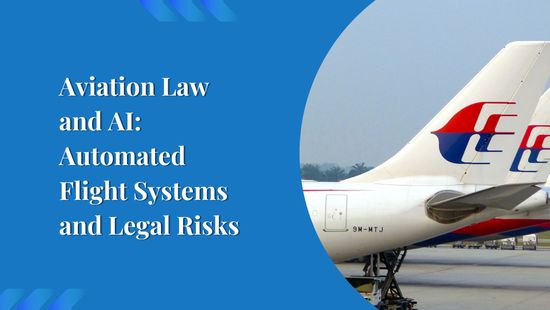
Artificial intelligence is increasingly being considered for flight planning, predictive maintenance, air-traffic management and autonomous aviation systems.
The legal question is not whether AI can make aviation safer. It is who bears responsibility when an AI-enabled system makes the wrong decision?
Automation Does Not Eliminate Liability
If an automated system makes a dangerous decision, potential responsibility may involve the operator, manufacturer, software developer, maintenance organisation or other participants.
Contracts should therefore allocate responsibility carefully.
Certification Is Critical
Aviation is safety-sensitive. Software cannot be treated as an ordinary commercial application simply because it runs digitally.
Systems must satisfy applicable safety and certification requirements.
The Explainability Problem
A highly complex AI model may produce an output without providing an explanation that humans can easily understand.
In a safety-critical environment, that creates evidentiary and accountability concerns.
Conclusion
AI will not eliminate aviation law. It will make aviation law more sophisticated.
The future framework must combine algorithmic governance with traditional aviation concepts such as certification, operational control, maintenance, accountability and safety management.