


Break your script into smaller, reusable functions or modules. This keeps your code organized and makes it easier to test, update, or reuse across projects. Create separate files for utility functions. Use parameters instead of hardcoding values. Keep one function focused on a single task.
Background and Context
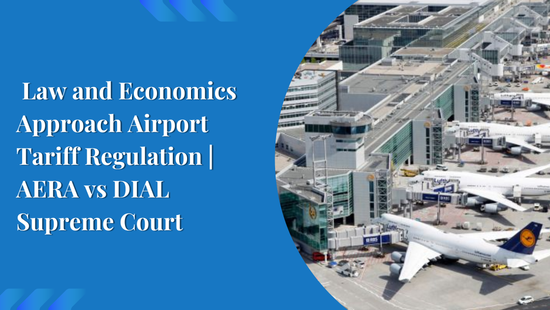
The Supreme Court in AERA vs DIAL while deciding maintainability made significant Law and Economics observations on airport tariff regulation. The Court in para 55 referred to Committee on a Road Map for Civil Aviation Sector report dated 30.11.2003 highlighting economic rationale for independent regulator to prevent abuse of monopoly power, as Airport Authority of India acting both as operator and regulator created conflict. On 22.12.2009 AERA White Paper, 16.02.2010 consultation paper, 02.08.2010 order laying philosophy and approach, and Guidelines in 2011 under Section 15 laying three-stage procedure assessing materiality, competition, reasonableness mirrors competition law AAEC assessment.
Section 13(1)(a) factors including cost for efficiency, economic and viable operation, return on investment and any other relevant factor are purely policy factors requiring economic analysis with no weightage leaving discretion to regulator. Section 13(1A) consultation for bidding, Section 13(2) amendment in public interest before five years, and Section 13(3) limitations resembling Article 19 indicate regulatory role concerned with public and economic interests not adjudication. Section 13(4) natural justice through consultations does not make it adjudicatory as required even for administrative actions.
Airports are natural monopolies with limited competition. Economic regulation ensures cost efficiency, viable operation and protection of consumers. Tariff litigation involves economic evidence such as Regulatory Asset Base, WACC, traffic forecasts and O&M costs requiring Law and Economics approach. Distinction between regulatory and adjudicatory is crucial. Judicial authorities cannot defend orders to preserve independence. However economic regulators like AERA have statutory duty to regulate market, ensure viability, prevent monopoly abuse and protect public interest. Hence AERA must be impleaded as necessary party and allowed to appeal under Section 31 by necessary implication, even though not expressly provided like Section 53T Competition Act. Institutional bias argument rejected as institution independent of officers.
Conclusion
AERA vs DIAL dated 18.10.2024 establishes Law and Economics foundation for airport tariff regulation. Supreme Court held AERA is independent economic regulator to prevent abuse of monopoly power, tariff determination is regulatory involving economic viability, efficiency and public interest requiring economic analysis. As law stands regulatory function allows AERA to be necessary party and appeal under Section 31. Judgment strengthens economic regulation jurisprudence vital for competition law and infrastructure regulation.